As the United States expanded westward in the 18th and 19th centuries, settlers, soldiers, and ranchers faced new demands that traditional European saddles could not meet. The work of taming and managing vast herds of cattle, traveling immense distances, and navigating rugged, unfamiliar terrain required equipment that was stronger and more versatile than anything available at the time.
Americans in the West needed to spend 12 or more hours in the saddle, rope livestock with a secure anchor point, and withstand unpredictable terrain. To meet these challenges, American craftsmen blended the best features of Mexican vaquero saddles with the lighter, adaptable elements of English designs. This fusion produced a highly specialized tool that could withstand the physical realities of the West.
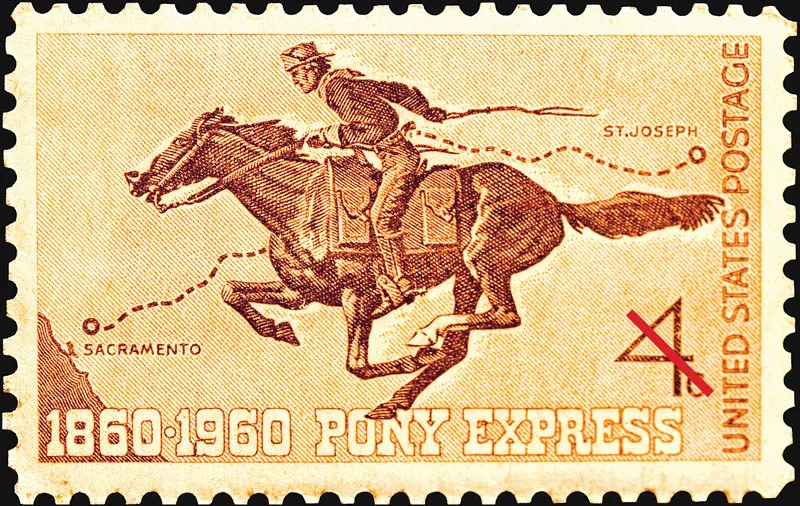
The Western saddle was more than just a piece of equipment; it was a driving force in the expansion and economic success of the United States. By making large-scale cattle ranching, trade, and communication possible across vast distances, it helped sustain the frontier economy and turn the west into a productive landscape. In the early 19th century, cattle drives moved thousands of animals from Texas to railheads in Kansas and beyond. Without the Western saddle, these operations would have been impossible. The saddle’s durability and comfort made it an essential technology in a period when mobility meant survival.
The Western saddle’s impact reached beyond ranching. Mounted law enforcement, postal delivery through the Pony Express, and U.S. military operations all depended on the reliability of the saddle and its variants. In essence, it became part of the infrastructure that connected the developing nation by facilitating trade, migration, and governance across territories that would later become integral to the United States’ agricultural and industrial dominance.
As America grew, the Western saddle helped define not only the country’s work but also its image. It became a centerpiece of American craftsmanship, driving the rise of saddle-making hubs in Texas, Missouri, and Oregon. These workshops, often family-run, exemplified early American industry. At the same time, the saddle evolved into a potent cultural symbol. The cowboy, mounted on his Western saddle, embodied values of independence and resilience. Through rodeos, Wild West shows, and Hollywood films, this imagery spread across the world and transformed the Western saddle from a regional tool into a national icon.
Its symbolic power mirrored America’s self-conception as a nation built on exploration and hard work. The saddle’s story reflects how American technology often develops through collective, iterative improvements shaped by necessity and opportunity.