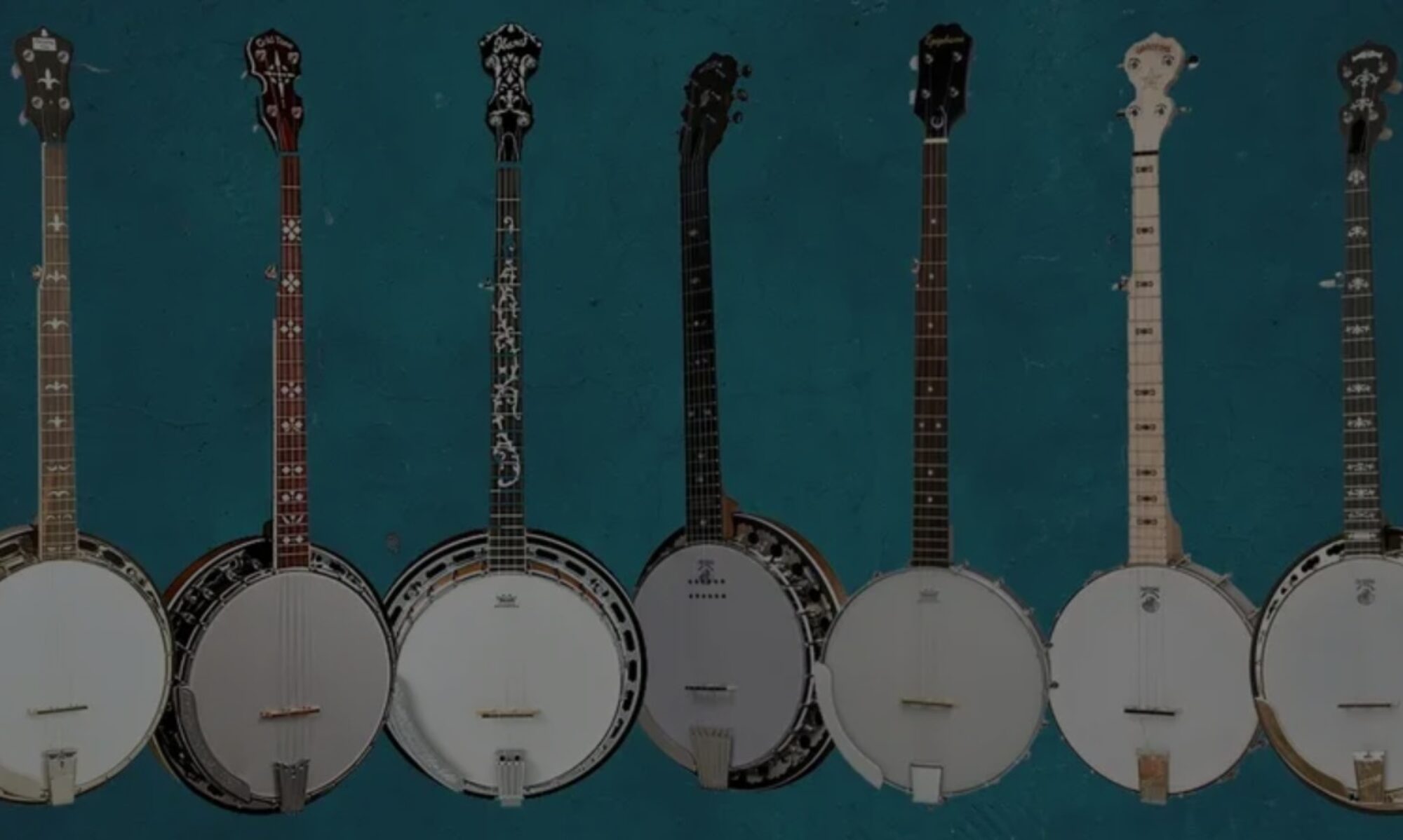
The banjo is directly descended from African, particularly West African, lutes. These antecedent instruments include the ekonting, ngoni, and kora. The ekonting in particular is notable for its similarities to early gourd banjos, although there is no one type of African lute that can be specifically attributed as the sole predecessor to the banjo (Fulwood, 2022). Many of these instruments were played by Jeli, also known as Griots, who were musicians who excelled at oral storytelling and history (Conway, 2003). Unlike modern flat-necked fretted banjos, these lutes tended to be unfretted with rounded necks.
During the Transatlantic Slave Trade, West Africans who’d been enslaved on Caribbean sugarcane plantations decided to invent a new instrument, the banjo, based on the lutes from their own cultures. The body of the new banjo was typically made out of gourds or calabashes, with an animal hide head (Blount, 2024). The banjo helped to foster a shared sense of community amongst these enslaved people despite the horrific conditions they were forced to endure at these plantations.
By the 1730s, the banjo had spread to the United States, where the design evolved to incorporate new synthetic materials as well as wood and steel (Blount, 2024). A significant change to the instrument in this transfer was that a fifth string and frets were added (Blount, 2024). It was soon produced on an industrial scale, which spread its reach to more communities, particularly white communities, who then adopted it into their own music (Dubois, 2016). However, despite its invention being owed to Africans and enslaved African Americans, the banjo was quickly appropriated by these white Americans, who used the instrument to portray racist stereotypes against Black people in minstrel shows. Once it gained wider use among white musicians and minstrel performers, the banjo was transformed into a more socially acceptable instrument that was heavily featured in white, quintessentially American music styles like Country and Bluegrass (Barnes, 2024).
The American minstrel shows that initially popularized the instrument among white Americans also helped transfer the banjo to England—something very notable for the time, since musical influence tended to exclusively flow from England to the U.S.—where new forms of the instrument and playing styles emerged (Winans and Kaufman, 1994). However, these changes and a new type of closed-back banjo called the “zither-banjo” were never adopted by Americans, who still maintained primary influence over the instrument (Winans and Kaufman, 1994).
Below is a scroll-through gallery meant to simulate a walk through of the evolution of the banjo, from its antecedents to its modern-day appearance. These images are placed in roughly the order of creation.
Read more
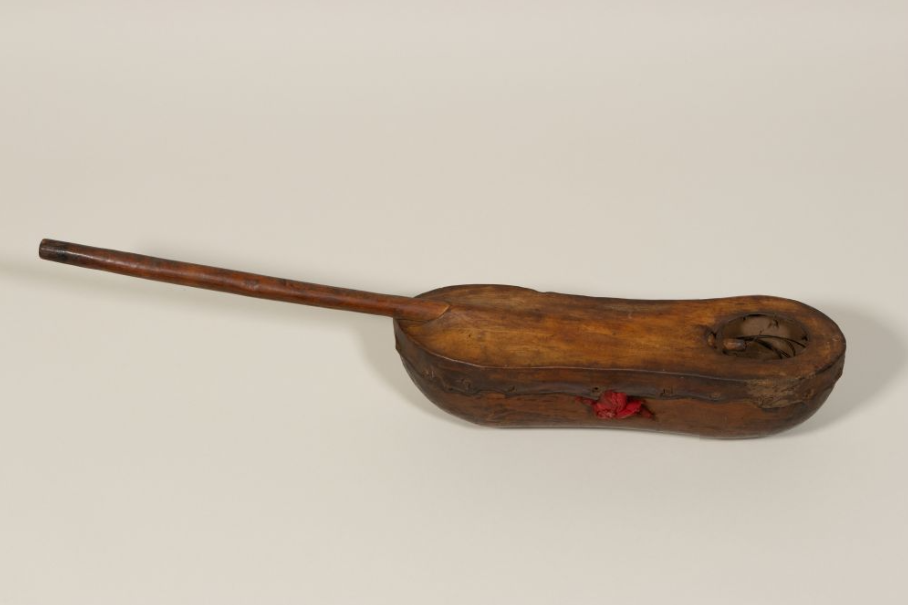
This is an antecedent to the banjo called a Xalam, made out of wood and skin. This particular Xalam is estimated to have been created in the late 1800s by the Fulbe people of the Saharan and West African regions.
Hoddu (Xalam). late 19th century. Wood, skin, 65cm x 12cm x 15.5cm. The Metropolitan Museum of Art. Open: The Metropolitan Museum of Art. Artstor. https://jstor.org/stable/community.34719026.
Read More
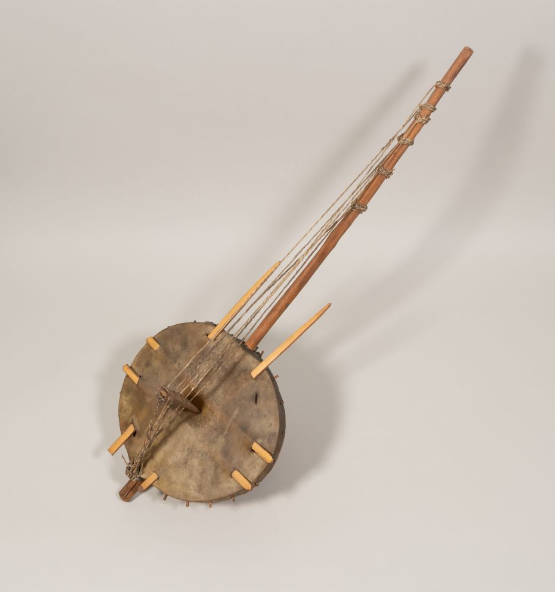
This is another antecedent to the banjo called the Ngoni, this time originating from the Loma people in West Africa. This was created roughly in the 19th century, and it was made out of gourd, wood, and leather.
Sora Ngoni (Simbingo). 19th century. Gourd, skin, wood, leather, 88cm x 31cm x 27cm. The Metropolitan Museum of Art. Open: The Metropolitan Museum of Art. Artstor. https://jstor.org/stable/community.27235563.
Read More
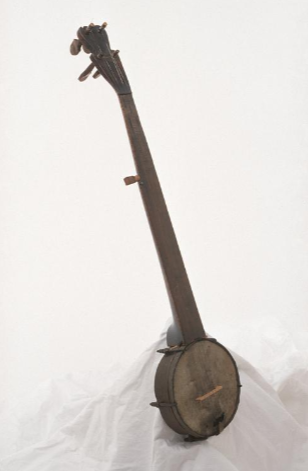
This five-string banjo was made in Tennessee sometime in the 1800s, though its maker is unknown. It is likely one of the earlier banjos to utilize wrought iron along with the other typical materials like wood.
“American Five-String Fretless Banjo | Smithsonian Institution.” 2025. Si.edu. 2025. https://www.si.edu/object/american-five-string-fretless-banjo:nmah_605682.
Read More
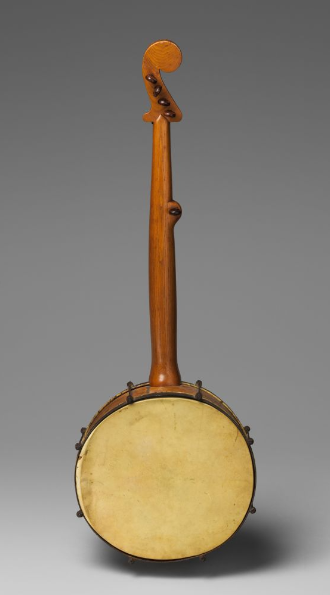
This wood, metal, calfskin head, and calf gut string banjo was created in 1850 somewhere in the United States.
Double Head Fretless Banjo. ca.1850. Various woods, metal hardware, calfskin head, calf gut strings, 41 in. Length x 5 in. Depth x 14 in. Diameter. The Metropolitan Museum of Art. Open: The Metropolitan Museum of Art. Artstor. https://jstor.org/stable/community.39752451.
Read More
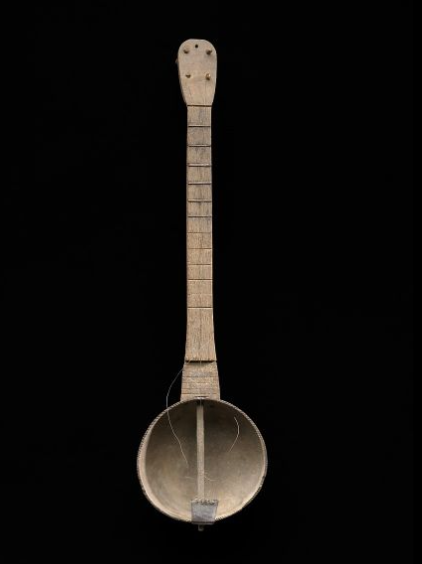
This banjo, dated to 1859, represents the earlier versions of African American banjos. It was made out of a gourd head and appears to have had three strings.
Created by Unidentified. Gourd Head Banjo. ca. 1859. Gourd with wood and metal, H x W x D: 7 × 26 1/2 × 2 1/2 in. (17.8 × 67.3 × 6.4 cm). National Museum of African American History and Culture; Collection of the Smithsonian National Museum of African American History and Culture. https://jstor.org/stable/community.31886663.
Read More
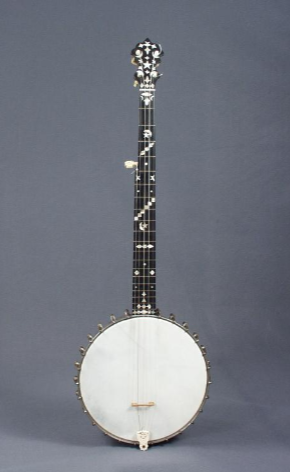
This banjo, made by Samuel Swain Stewart Co. in 1889, is made out of various metal pieces and several different types of wood. Stewart, notably a white man, was a famous banjo player who popularized the “finger style” of playing. Stewart was known to denounce the banjo’s African American roots as well as its use in minstrel shows.
“Stewart Five-String Banjo | Smithsonian Institution.” 2025. Si.edu. 2025. https://www.si.edu/object/stewart-five-string-banjo:nmah_605689.
Read More
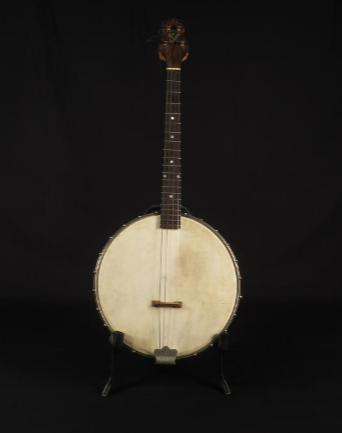
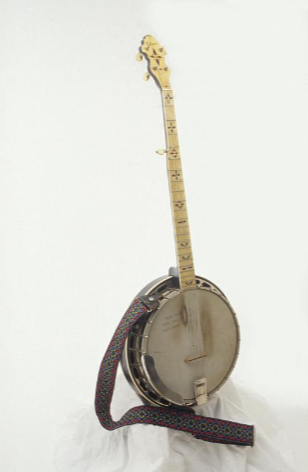
This banjo came from Gibson Inc. in 1923 and was a widely-used model of the instrument. It was made out of ebony, maple, animal skin, and metal.
“Gibson Tenor Banjo | Smithsonian Institution.” 2025. Si.edu. 2025. https://www.si.edu/object/gibson-tenor-banjo:nmah_606326.
Read More
Also created by Gibson Inc, this banjo was made in 1935 and was owned by Benjamin Wade Ward, a prominent (white) banjoist. While most of the materials are the same as the older Gibson banjo models, it is worth noting that this one was also made with plastic.
Gibson Five-String Banjo, Used by Wade Ward | Smithsonian Institution.” 2025. Si.edu. 2025.https://www.si.edu/object/gibson-five-string-banjo-used-wade-ward:nmah_605688.
Read More
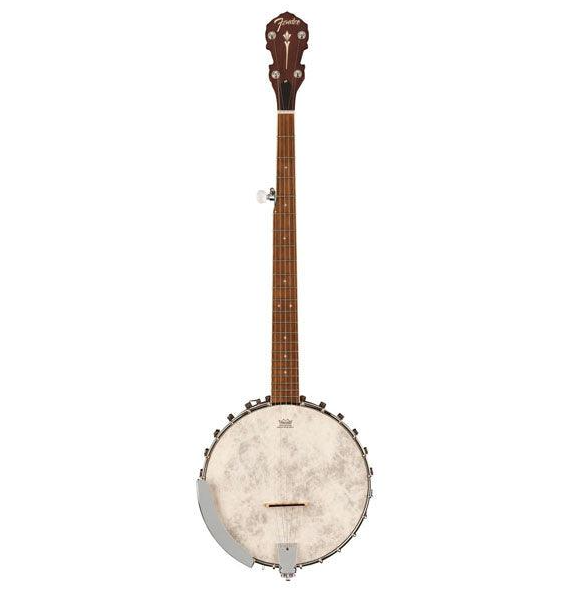
This modern banjo from Pecknel music is made out of mahogany and “fiberskyn,” which is a synthetic material resembling the real animal skins that used to be used to make banjos. It is both acoustic and electric.
“Fender Paramount PB-180E Acoustic-Electric Banjo,” Pecknel Music, https://www.pecknelmusic.com/products/pb-180e-banjo-970302321?srsltid=AfmBOoptN0ARCJXX1LQBGODhZWKSgTKdaVmHclrqflIHCu3QA9pfHWLG.