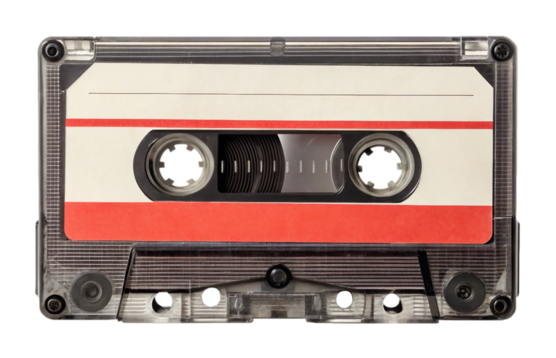
Before
Despite being a staple of 1980s culture, the cassette tape traces its roots back nearly 70 years. Before Lou Ottens debuted the compact cassette in 1963, Valdemar Poulsen debuted his magnetic wire recording Telegraphone at the Paris Exposition in 1900, and despite being a commercial failure, it paved the way for the development of magnetic sound recording as a medium.1 During World War 2, at a time of intense technological innovation, allied forces discovered Nazi Germany experimenting with magnetic tape recorders, dubbed Magnetophons.2 These confiscated models were reverse engineered and improved upon by American audio companies to develop the technology for retail sale.3
During the late 1950s, RCA began marketing their “Sound Tape Cartridge” which bore strong resemblance to the compact cassette we know today, save for its size. Bernard Cousino’s endless-loop tape development was adapted by William Lear for use in his jets. After redesigning the complex original cartridge, Lear’s new 8-track cartridge was incorporated into optional stereos by the Ford Motor Company in the 1966 model year, launching 8-track tapes into the mainstream. Despite its success, the 8-track tape lacked the same portability and ergonomics of the compact cassette tape.4
Invention
The creation of the cassette tape came about from an inventor named Lou Ottens. Ottens created the cassette tape while a part of the Philips Company in Belgium in 1962. The original cassette tape offered large reel-to-reel tapes that provided high-quality sound, however, these reels were often seen as too clunky and expensive. In order to fix this issue in the cassette tapes design, Ottens shrank the tape technology in the early 1960s. Ottens made this update in the technology when he became the head of new product development in Hasselt, Belgium, for the Philips Technology Company. The invention was soon released in the United States for purchase a year after its creation and popularity.
The cassette tape’s assembly contains two small spools inside its plastic exterior. These two small spools in the tape wind the magnetic-coated film and pass it from one side to the other. The magnetic film contained within the tape is where the audio content is stored, and can be recorded on a cassette tape. Once recorded, it could easily be played with the proper cassette player. The cassette tape accomplished becoming a small, portable audio player that had the ability to fit into a small space which was of course a significant departure from the large reel-to-reel recorders.
After
The cassette tape grew in popularity due to the fact that it was much more portable and cheaper compared to predecessors like the vinyl record. This can also be attributed to inventions of machines that played cassettes like boomboxes or the much more portable Sony Walkman. Today we can log onto streaming platforms like Spotify or Apple Music on cell phones and don’t realize how that easy access to music from wherever we are dates back to the invention of the cassette. The Walkman made music portable and more easily shareable the mainstream norm.5 Cassette tapes also allowed for the development of mix-tapes and made creating playlists with combinations of music rather than the standard album possible for music fans.6
While the cassette tape became the popular music listening format in the 1980s, competition soon arose. By the late 1980s, cassettes surpassed vinyl records in sales with their growth in popularity.7 However, cassettes began taking a slight decline with the introduction of the compact disc (CD) in the 1990s. Furthermore, in the early 2000s, downloading and, later on, streaming music became the most popular music listening formats. This isn’t to say that cassettes left the music space, however. The mid-2010s saw a resurgence in the amount of cassettes as they were becoming increasingly popular with the younger generations. The way cassettes are made creates a more acoustic and different sound when compared to the perfected tuning and manufacturing of music on digital platforms. Cassettes offer music fans a different experience when listening to music, which some argue is the reason for its revival beyond pure nostalgia.8
Website
For this project, we want to make a website that is fun and brings people into the world of music and cassettes while still being accessible and navigable for everyone. Cassettes took off in the 1980s and we recognize that this time is commonly associated with the technology and has a level of nostalgia and cultural significance for its users. We want to incorporate this into our website design by using color schemes, patterns, and other images to create a website where users feel the energy of the era come through, but we also want to maintain a level of modernity for accessibility’s sake. We want to be using these colors and designs but with a modern twist with slightly lighter tones and less saturation so that the website is not too overwhelming or difficult to read and navigate.
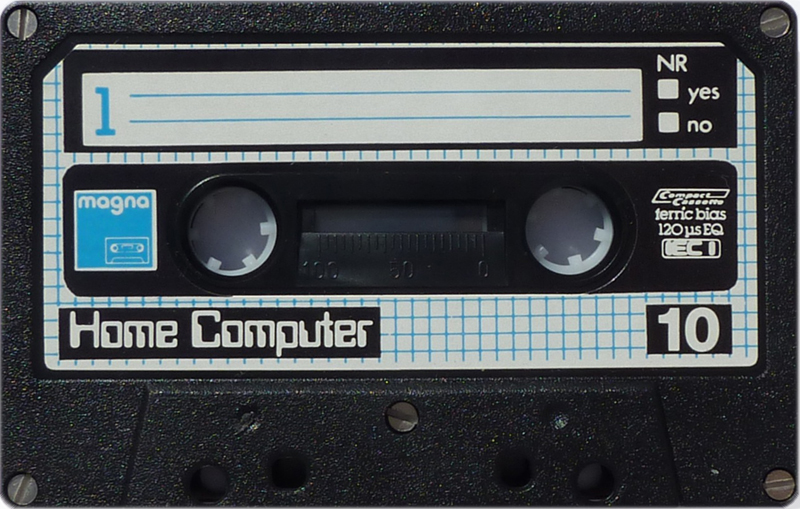
The website will be broken up into sections similarly to how we have ordered this proposal: what came before, how and why the cassette was invented, and finally the what came after (alternatives and cultural impact). Every piece of information, like this proposal, we want to have written out in the pages on the website instead of putting links to files. This will create a more enjoyable user experience because people can easily access this information right on our site. By having this much written information, we acknowledge that it’s important that we also take the necessary steps to include headers and captions so that information is easily navigable for everyone. We also value using images and diagrams of actual cassettes to showcase how it works and the different parts that make up the tape. We want to incorporate this throughout the website, but we also want to create a page specifically for these images so that users can easily reference them. Finally, we will have separate pages for our proposal and bibliography and final documentary.
Documentary
To say we’re following a pattern would be accurate. Like this proposal, and our website, the documentary will be split into the same three sections: before (antecedents and historical context), during (the how and why of invention, and the initial stages of the cassette’s adoption) , and after (alternatives, impact, and the future of cassettes). Utilizing a mixture of existing footage by way of advertisements, televised news, our own shot footage of Abby’s cassette collection and boombox or CJ’s Walkman, and a number of other sources, we will create a cohesive look and feel. Through a mix of visual and verbal story telling, our documentary will tell the story of the compact cassette tape.
- Mark Clark and Henry Nielsen, “Crossed wires and missing connections: Valdemar Poulsen, The American Telegraphone Company, and the failure to commercialize magnetic recording,” Business History Review 69, no. 1 (1995) 1, ProQuest. ↩︎
- Friedrich Engel and Peter Hammar, “A Selected History of Magnetic Recording the Premiere of the Magnetophon Audio Tape Recorder in Berlin, 1935,” ed. Richard Hess, August 27, 2006, https://richardhess.com/tape/history/Engel_Hammar–Magnetic_Tape_History.pdf. ↩︎
- Andrew Crews, “From Poulsen to Plastic: A Survey of Recordable Magnetic Media,” Archive.org, December 1, 2003, https://web.archive.org/web/20131218095921/https://www.ischool.utexas.edu/~cochinea/html-paper/a-crews-03-magnetic-media.html. ↩︎
- Crews, “From Poulsen to Plastic” ↩︎
- David Pierce. “Sony’s Walkman Turns 35: The Gadget That Started It All.” The Verge. July 1, 2014. ↩︎
- James Hill. “A Brief History of Music Formats.” UnifiedManufacturing, January 16, 2022. ↩︎
- Howie Singer and Bill Rosenblatt. Key Changes: The Ten Times Technology Transformed the Music Industry. 1st ed. New York: Oxford University Press, 2023. ↩︎
- Joanna Demers. “Cassette Tape Revival as Creative Anachronism.” Twentieth-Century Music 14, no. 1 (2017): 109–17. ↩︎
Annotated Bibliography
Andersen, Christian Ulrik, Søren Bro Pold, and Morten Suder Riis. “A Dialogue on Cassette Tapes and Their Memories.” A Peer-Reviewed Journal About 3, no. 1 (2014): 156–67. https://doi.org/10.7146/aprja.v3i1.116095.
This is a peer reviewed article that discusses the understanding of how some practices also express a critique of contemporary digital culture. It allows us to understand technology from different perspectives.
Baert, Luc. Digital Audio and Compact Disc Technology. Edited by L. Baert. 2nd ed. Oxford, England: Newnes, 1992.
This book gives a basic history of each of the digital audio devices that were created up until 1992. In the case of general information it can give you the basics.
Clark, Mark, and Henry Nielsen. “Crossed wires and missing connections: Valdemar Poulsen, The American Telegraphone Company, and the failure to commercialize magnetic recording.” Business History Review 69, no. 1 (1995): 1. ProQuest.
This source covers the development and commercial failure of Poulsen’s Telegraphone, which, being a major step in the development of magnetic sound recording, is important as a foundation for which further antecedent technologies are built off of.
Crews, Andrew. “From Poulsen to Plastic: A Survey of Recordable Magnetic Media.” Archived December 18, 2013, https://web.archive.org/web/20131218095921/https://www.ischool.utexas.edu/~cochinea/html-paper/a-crews-03-magnetic-media.html
This source covers both the technical and social aspects of a broad range of magnetic recording devices, including their downfalls and development off of each other. Using this source to understand the way the four main technologies we will cover developed from each other will be crucial.
Chappell, Bill. “Lou Ottens, Inventor of the Cassette Tape, Has Died.” NPR.org, March 10, 2021. https://www.npr.org/2021/03/10/975598869/lou-ottens-inventor-of-the-cassette-tape-has-died.
This source serves as an overview of the invention of the cassette tape and its later impacts on the music industry and society at large. It also provides some context and a look into the life of Lou Ottens, inventor of the consumer cassette tape. This source will be a necessary source to investigating and understanding the inventor and invention of our art
Demers, Joanna. “Cassette Tape Revival as Creative Anachronism.” Twentieth-Century Music 14, no. 1 (2017): 109–17. https://doi.org/10.1017/S1478572217000093.
Exploring the cultural impact of cassette tapes, Demers argues that the recent revival of the popularity of cassette tapes in younger generations is due to perceived nostalgia which can be attributed to technical aspects of the tapes themselves. She points out how cassettes have a natural “old” and “worn” sound to them that other alternatives, like digital music, don’t have, hence the perceived nostalgic factor to them permitting for their refound popularity.
Drew, Rob. Unspooled : How the Cassette Made Music Shareable. Durham: Duke University Press, 2024.
This is a deep dive into the invention of the cassette tape including its significance and influence. It allowed us to properly understand the history, especially in the concept into.
Engel, Friedrich, and Peter Hammar. “A Selected History of Magnetic Recording.” https://richardhess.com/tape/history/Engel_Hammar–Magnetic_Tape_History.pdf
This source covers the development and the debut of the Magnetophon, the direct mainstream successor to Poulsen’s Telegraphone. Important in understanding the introduction of widespread usage of magnetic tape technology into various aspects of media.
Goldmine Staff. “Collector’s Corner: The History Of The Eight-Track Tape.” Goldmine Magazine, December 24, 2005. https://www.goldminemag.com/collector-resources/collectors-corner-the-history-of-the-eight-track-tape/
This source covers more social and cultural impacts of specifically 8 track tapes, which we want to cover more in depth as it relates closest to cassettes in design and societal impact.
Hill, James. “A Brief History of Music Formats.” UnifiedManufacturing, January 16, 2022. https://www.unifiedmanufacturing.com/blog/a-brief-history-of-music-formats/.
This article gives a simple and straightforward chronology of music related technology from 1931 to 2002. For each invention, Hill gives a brief description of what is, its possible flaws or setbacks, and the impact on how we listen to music.
Masters, Marc. High Bias: The Distorted History of the Cassette Tape. University of North Carolina Press, 2023.
This source provides an understanding of the history of the cassette tapes. This allows for different points of view to become a part of the development and adjustment.
Pierce, David. “Sony’s Walkman Turns 35: The Gadget That Started It All.” The Verge. July 1, 2014. https://www.theverge.com/2014/7/1/5861062/sony-walkman-at-35.
Pierce’s article discusses the invention and impact the Walkman had on our ability to listen to music in a portable way. Inventions like the Walkman (1979) helped grow the popularity of cassettes because instead of needing something like a boombox, people could carry the much smaller cassette tape player.
Singer, Howie, and Bill Rosenblatt. Key Changes: The Ten Times Technology Transformed the Music Industry. 1st ed. New York: Oxford University Press, 2023. https://doi.org/10.1093/oso/9780197656891.001.0001.
Singer and Rosenblatt explain developments in technology that made an impact on the music industry from the phonograph all the way to artificial intelligence. For this project, we would use the chapter about the vinyl record to explore the antecedent, the chapter about the cassette tape, and then utilize the chapters about compact discs, downloading, and streaming to explore the inventions that competed with the cassette tape.
Vintage Cassette. “History of Compact Cassette.” Accessed September 24, 2025. http://vintagecassettes.com/_history/history.htm
This source provides a timeline of antecedents to the cassette tape, and some technical details about them. This source can help fill gaps between major developments and highlight minor products that still developed into the cassette.
Zuckerman, Art. “Stereo Goes back to Tape.” Popular Mechanics, September 1960. https://books.google.com/books?id=CNwDAAAAMBAJ&lpg=PA205&pg=PA206#v=onepage&q&f=false.
This primary source provides a look into the attitudes and ways to experience recorded sound and music in the early 60s, and a view into the possibilities that would come along in the next decade. It also provides a helpful look into the immediate antecedents and perhaps most direct predecessors of the cassette tape.
Leave a Reply