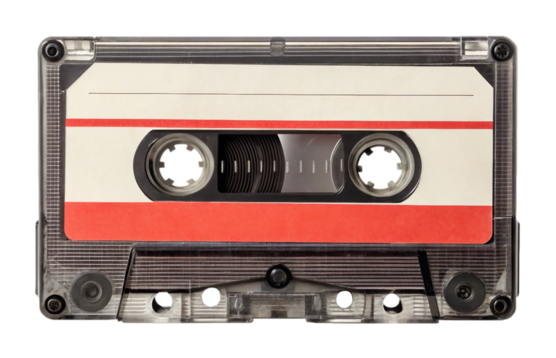
Cassettes did not only offer consumers more portability of their music, but it allowed them to customize the music listening experience in a way that could never have been done before by making mix-tapes. Mix-tapes are compilations of songs recorded onto a cassette, creating a personal playlist of songs rather than only listening to a certain album. This transformed the way we consume and share music. Peter Catlin, a librarian at the University of Mary Washington, described his experience with mix-tapes as his most favorite memory of cassettes, equating mix-tapes to a form of art and self expression1.
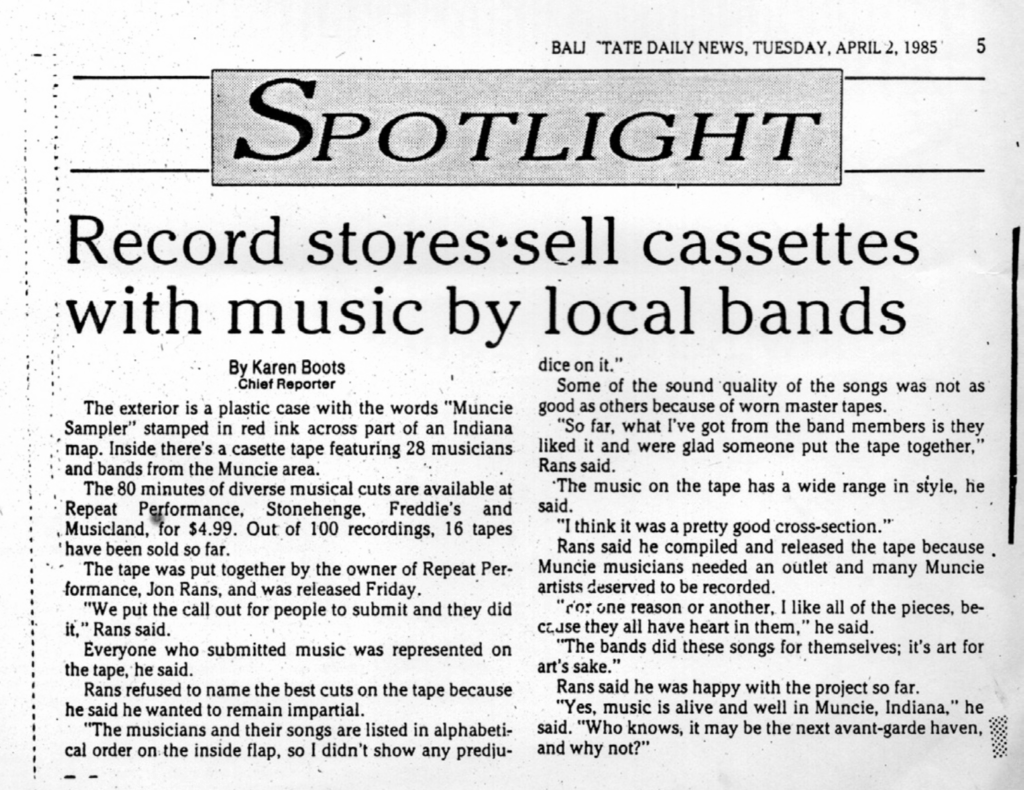
Mix-tapes not only shaped the individual or collective music listening experience, but they also allowed musical artists and entire genres of music to grow and influence the American music industry. An example can be found in an article from an Indiana newspaper, the Ball State Daily News, from 1985, which shares with the local community that a record store in the area was selling mix-tape cassettes with music made by local bands.2 The reporter, Karen Boots, writes that the store owners expressed that “[Muncie] musicians needed an outlet and many [artists] deserved to be recorded.”3 Mix-tapes offered people across the country, not just those with prior connections to the music industry, the opportunity to share their art with the world. Mix-tapes and cassettes not only helped individual bands and artists, but they’re credited with launching the hip hop genre, one of the most popular and influential music genres in American history. As quoted in Unspooled: How the Cassette Made Music Shareable, DJ Bobbito Garcia says, “Cassettes were hip hop […].”4 Many hip hop artists got launched their careers off from the success of their mix-tapes. Even when they had signed record deals, artists still released mix-tapes to promoted current projects or releases music in between albums.5 Mix-tapes were integral to the growth of such a culturally significant genre that reflects and shapes American culture to this day.
- You can see Mr. Catlin’s full interview here.
NOTE: Full interviews will not be available until our documentary releases on November 11th, 2025.
↩︎ - Karen Boots. “Spotlight Record stores sell cassettes with music by local bands.” Ball State Daily News, April 2, 1985. https://dmr.bsu.edu/digital/collection/NoBarGBChaosR/id/239 ↩︎
- Karen Boots. “Spotlight Record stores sell cassettes with music by local bands.” ↩︎
- Rob Drew. Unspooled: How the Cassette Made Music Shareable. Durham, NC: Duke University Press, 2024, 131. ↩︎
- Rob Drew. Unspooled: How the Cassette Made Music Shareable. Durham, NC: Duke University Press, 2024, 134. ↩︎
Leave a Reply