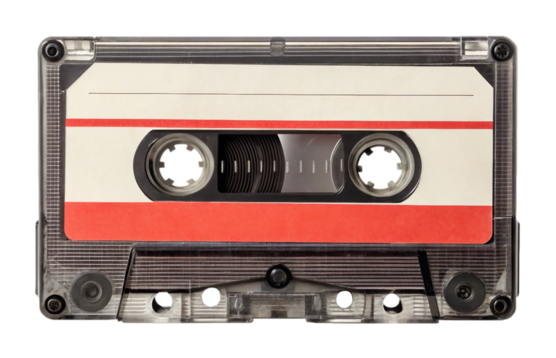
Transcript:
CJ: I want to ask how did you, like, primarily listen to music before cassettes came about?
Caffrey: Before cassettes? Okay so before cassettes… so I was born in 1976. So, I have early memories of, like, a little almost, like, a toy Bee Gees record player that my parents probably got me in like the late 70s, right? Like after Saturday Night Fever. So, I think in the late 70s, early 80s, when I was still a kid, I probably just had little records that I played on that. But then as I got into music, probably like ‘84, ‘85…
CJ: Right.
Caffrey: …you could still buy vinyl records, but you were seeing more and more cassettes, right? So probably my earliest memories are like 1985. I might’ve told this in the class we had together, but my brother had a The Police ‘Greatest Hits’. I think it was ‘86, right? And we were on a road trip. I had just gotten a Sony Walkman, didn’t have a lot of taste cause I was only ten years old, so I’m not really going out buying a lot of music on my own. My brother on a road trip let me borrow this ‘Greatest Hits’ Police cassette and that’s what I really remember, like, listening to over and over and over again. So probably from the mid 80s to the late 80s, I would primarily listen to music on cassettes, but before that, really just on vinyls, you know?
CJ: Right. Now, were those, like, was that like Bee Gees record player, was that like specifically 45s or was that like…
Caffrey: It could play anything, you know, and that’s interesting. Like I would love to look it up, like, on eBay right now, you know, cause I still vividly remember it, it’s that classic Saturday Night, you know, Fever, all three of them with, like, their shirts down and hairy chest and everything like that. But it was like purple, I think. But my parents must have got it for me and you know, back then, I would probably just get like, probably like, you know, toy, like, little 45s and stuff like that. I don’t remember getting any, like, you know, the White Album or anything like that, yeah.
CJ: Now, you mentioned The Police, but were there any other, like, artists that you listened to, whether it be on cassette or on records that were more specific, or genre-wise even?
Caffrey: Yeah, it was probably mostly pop and rock. So, The Police, Rush, Sting, Genesis, you know, kind of those bands from that time period. And then, but I was still kind of buying vinyl. A lot of times it really just depended on, like, what store you were at and what you saw there, you know? Cause they used to sell vinyl albums in, like, grocery stores, right? So there would be, so your parents would go shopping and they’d let you roam around, like, the mall or the shop and then you would just go into the section of the store where they had, like, video cassettes for rental and vinyl albums. So I do remember buying some vinyls, like the Beetlejuice soundtrack or like a Sting album. But if the cassettes were there and they were cheaper you would pick up those.
CJ: Right. So, what do you think was so special about cassettes? Like, the ability to use them.
Caffrey: Yeah! Well, I think definitely… they were special because the Sony Walkman was just so cool, you know? So even if you couldn’t get, like, a Sony Walkman, you could get, like, a knockoff. I don’t remember them being terribly expensive, you know? It wasn’t the type of technology where it came out and it was, like, $400. It was probably pretty reasonable when it came out. And just you could take music on the go and it was such a game changer when you went on road trips with your parents because you didn’t have phones and, you know, parents maybe weren’t as, like, into talking to their kids all day about their lives and stuff like that. So you were basically in the back seat for 10 or 12 hours and all you had to listen to was your Walkman and whatever cassette tapes you took with you. So it gives good memories of, like those, that early time of where, like, you were able to take music out of your home and listen to it elsewhere. So it became portable for the first time.
CJ: Was it a big thing when they came into your lives, or something like that?
Caffrey: Yeah, I think so because they were so portable that, like, especially as I got into, like, the late 80s and I was going into middle school, like, you would, you know, you probably can relate to this when you’re in middle school, you start talking to your friends about what music they like, and then they, you know, as soon as you strike up a conversation where they like a band that you like, well then you have those conversations, like, “Well what albums do you have?” And they might mention a couple albums they have, like, “Well I don’t have those. I’ll bring them some of mine.” I remember vividly, like, taking Rush cassettes into middle school and trading them with another friend and they were so small so you could just, like, throw a bunch in your backpack, you know. So it was kind of cool cause before that it was just vinyl records, right? So, you’re not really gonna walk around with those in your backpack. So they were small, they were compact, you know, the liner notes were cool even though they were just small, like, they would unfold, you know, so you had that experience of just taking it out and, you know, seeing the liner notes, seeing the pictures. So it wasn’t as grand as a vinyl, but vinyl was kind of on the way out. So for my generation it was like “We’re not going to be buying vinyls anymore.” And it was kind of before CD. So it’s just a special, like, you know, pivotal moment in the 80s to kind of, like, you know, connect through a new way of listening to music.
CJ: How do you think the portability really impacted your usage of them? Like, I think you may have already touched on this.
Caffrey: Yeah, I think it was just the fact, like, it kind of opened up a new way of, like, you can take, you know… entertainment back then was so… in your house, right? Cause you didn’t, you know, you didn’t have cell phones and you didn’t have laptops. So, you couldn’t take a laptop to a Barnes & Noble. You couldn’t go to even a library and go on the internet in 1986, right? And CDs were kind of new as well, so you didn’t have CDs. And even if you did have CDs, they didn’t have portable CD players yet. They weren’t… there weren’t CD players in cars. So, even by 1985-1986, your cars had cassette decks. So, you know, the cassette really is that first time where, like, you could take entertainment that you would normally just be listening to in your house and take it with you in your car. So you’d ask your parents, like, “Can I play… can I play the music?” You know, instead of listening to the radio, “Can I give you this Rush cassette to listen to?” And of course, Rush drove my dad crazy cause he was more into Bob Dylan and James Taylor. And I remember giving him an album of Rush and, like, we’re on side two, and he’s like, “Kevin, this is making me nervous. We have to shut this off.” You know? Cause he just wasn’t used to it. But it kind of was like, “Oh, like, I might have control as a kid to dictate what kind of music we listen to.” Cause I can bring this small little cassette in the car with us. So it just gives a good, like… I think it was a perfect time for them to come out, you know, to kind of like, take a step technology wise, but not really too big of a step.
CJ: Touching on that a little bit, with from the older generations. Not even just like the music that you were listening to, but, like, just the concept of cassettes… how did, like, the older generation do you think, like, reacted to that?
Caffrey: You know, I think it was… I don’t think it was like… I feel like in the 80s we didn’t have a real sense of nostalgia yet, right? Because, like, things just seemed so new. So I think the older generation… I think nowadays, like, we have a very precious sense of like, “Oh, everything sounds better on vinyl” and “I like to get vinyl” and “I don’t like streaming”, and that’s true, there’s a lot of merits to that, but I think when cassettes came along, especially since it was the 80s where, like, people were into all the technological advances, I think even the older generation were probably just excited about it because they had cars too, they were driving cars that had cassette decks in them too. You know, when you drove around back then there wasn’t satellite radio. So your choices were just a couple of radio stations that happened to come in in your area. So I think even the older generation was like, “Oh cool!” Like, so my mom had Johnny Mathis cassette tapes in her car, right? My dad had his Bob Dylan and James Taylor cassettes in his car. So I think they liked it. I don’t think it was anything like “Oh, no no no, I’m just sticking to my vinyl.” I’m sure there were people like that, but I think it was just like “Oh, something new” and remember, the CD hadn’t come along yet. So I think we spoke about in our class that when the CD came along, then I think that was a tide where people are like “Now I have to buy this album again? Like, you’re telling me, like, first it was vinyl, now it’s cassette, and now I have to buy it on CD?” But it wasn’t at that point yet. It was almost like, “Vinyls are great, but here’s something really compact that you can take with you.” And in everyone’s mind, ‘83, ‘84, the common person probably didn’t see CDs coming down the line you know?
Caffrey (cont.): And also, I feel, like, it wasn’t also a jump in price. Like, so, it’s also one of those things that nowadays, when something new comes along, like, usually that item is so much more than whatever you’re doing now with it, right? But I feel like cassettes came along and the prices of them were probably comparable to vinyl. So I feel like it was just a part where… It’s almost like a pure moment where, like, you could really, like… it gave you so much choice without really infringing on, like, you didn’t have to drop a ton of money on anything. Your cars were already equipped with cassette decks so you didn’t have to go out and buy a separate item like we were talking about before the interview; when CDs came along a lot of cars didn’t have CD players in them, so to listen to those, you had to buy CD player for your car, you know? So I just think that it was, like… it gave people the first time of, like, choice with their music and their ability to listen to music outside of their house.
CJ: So, last question. What do you think is your favorite memory of cassettes? Whether it be from the one in your childhood with The Police, or just in general? Like, your favorite memory.
Caffrey: Yeah, you know, certainly mixtapes. Probably anyone you talk to is going to say mixtapes, right? Because they were just so fun to make. But actually, before this interview, I was thinking of, like, another really good memory I have of tapes is, you know, when I was in the 80s and the 90s, especially in the 90s, you know, I would be in bands, because I’m a musician and a songwriter, right? So back then, in the 70s and 80s, you made demo tapes. Whether you were playing a show, you would throw them out to people, or whether you were sending them into the record companies back in the day. So, I have a lot of good memories of, like, recording with friends or on my own and making these copies and sending them out. And of course, you would get a rejection letter. [Laughter] Nothing would come of them. Once I was playing a show and we threw… we made these demo tapes, we stayed up all night, we made copies of them, like… We were playing at our high school, me and my friend, senior year, I’m like “Yeah, we’re gonna throw our demo tapes out to the crowd and they’re gonna love them. They’re getting these free demo tapes.” So we throw them out to the crowd, we take a break, we come back on, and we weren’t doing very well, they were throwing the demo tapes back at us, you know? [Laughter] So it was just, like… I have a fond memory of, like, just the amount of time, you know, you would record it, and then put it in your other cassette deck, and you’d make a copy of it. And of course, the quality was getting, you know, degraded because the more copies you made, the sound quality would get a little inferior. But, so, in addition to just the music that I could buy, it just… I have a personal connection with it as well. I just remember making music back then before like digital workstations and CDs, like this was the only way you could get your music out there and you had to physically go give it to people and hope they didn’t throw it back.

Leave a Reply