- Footnotes: we added footnotes throughout the website like needed
- Bibliography: we edited the bibliography so that it was in alphabetical order
- Citations: fixed grammar, spelling, etc and added correct citations for photos
- Added page: we added a page of interview quotes where we asked people their experience with IMAX
Welcome to the exploration of IMAX! This website is the product of Ava Bredehoeft, Isabella Ellenberger, and Oliver Marcel.
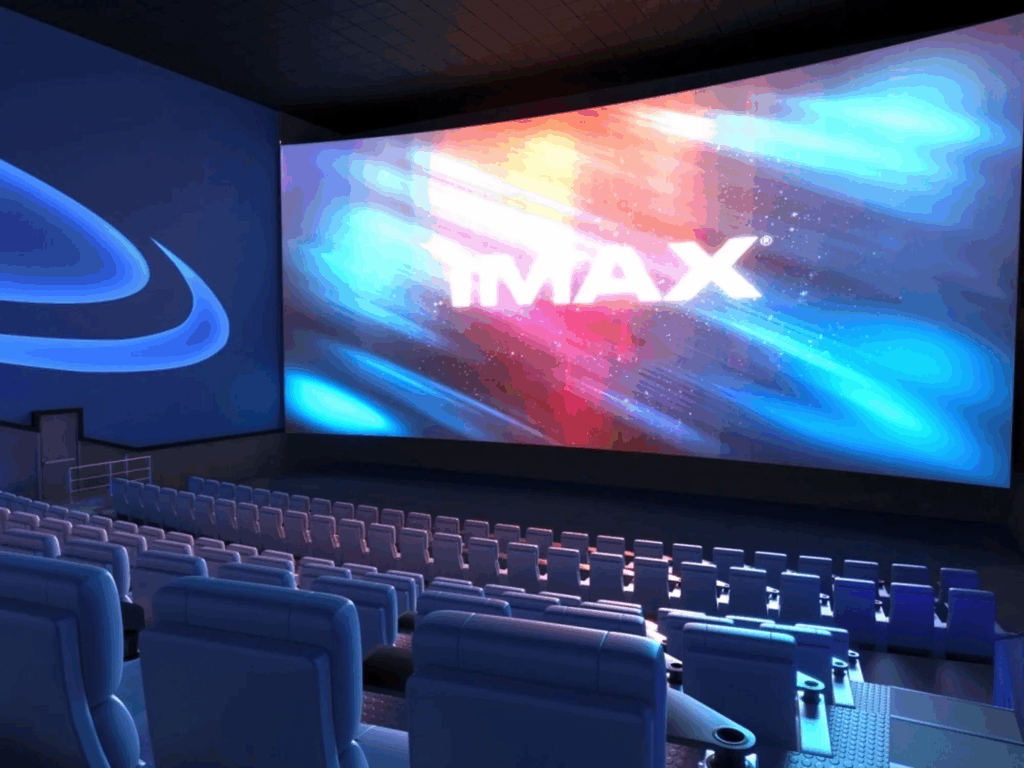

Throughout this website we will take a deep dive into what IMAX is all about, the makings of it and what came before, competitors and alternatives to the technology, and how it has interacted with society.
We will explore from the first invention of film to crisp visuals seen in modern movie theaters today. Technology continuously reshapes the way we experience storytelling. Through this stands IMAX, a product of technology that has redefined the boundaries of the moviegoer experience. Having the power to connect artist and audience through high tech projectors, sound equipment, and unique theater designs to create the ultimate viewer experience.
We hope you enjoy our website and learn more about the creation and experience of IMAX.
Thank you for visiting our site!
Website Outline
Pages
- Home page – introduction, overview
- artifacts
- sound system
- curved screen
- projector
- film camera
- reviews
- videos on quality difference 75 mm vs 35 mm – dvd screen size selection
- promotions for original screening / promotions for imax
- antecedents
- photos
- patents / drawings / mockups
- process – timeline (timeline js / wordpress timeline block) quick overviews of events
- Linking to antecedents page when needed
- alternatives
- standard movie theaters – what systems do they use?
- digital light processing
- digital cinema initiatives
- standard movie theaters – what systems do they use?
- dolby vision & dolby atmos
- 3d & 4d
- at home cinema / streaming
- Interactions w/ society
- increase of popularity, preference
- economic impact – ticket prices, resurgence of theater industry
- effect of covid – desire to bring people back to theaters
- Imax exclusive (directors)
- Film maker experience vs viewer experience
- documentary – separate page
- bibliography – separate page
Documentary Outline
- introduction – what is imax
- how it began – who started it
- meet the people
- why is it important – impact
- use in museums
- Economic impact
- effects / interaction with society
- interviews with personal experiences
- covid
- re-releases
- future? – what is next and/or problems with IMAX
- competitors
- usage with directors vs experience
needed elements:
- B-roll of imax/movies/theatres
- Interviews (primary and reused)
- Interviewing people who experienced imax and also taking interviews from filmmakers + inventors & ceos of imax company
- Photographs
- imax/movies/theatres
Annotated Bibliography
Secondary Sources
Acland, Charles R. “Imax Technology and the Tourist Gaze.” Cultural Studies 12, no. 3 (July 1, 1998): 429–45. doi:10.1080/095023898335492.
This article references the book The Tourist Gaze of author John Urry, who argues that tourists’ experience of environments is shaped by the tourism industry and personal expectations of authenticity. Acland applies this argument into the film industry and IMAX technology. These two arguments will be important in establishing the interaction of IMAX with commercial aspects of the film and tourism industry.
Bridgett, Rob. “Imax.” Working with Sound, 1st ed., vol. 1, Routledge, 2023, pp. 123–26, https://doi.org/10.4324/9781003354352-38.
This chapter looks at how IMAX has impacted the cinematic experience through sound within a theatre. It also talks about the screen offered for the IMX experience as it enables the audience to look around the screen.
Cook, David A. “The Age of IMAX, or the “Immersive Cinema,” 1986-2009.” in A History of
Three-Dimensional Cinema. 1st ed. London: Anthem Press, 2021. https://ebookcentral.proquest.com/lib/umw/detail.action?pq-origsite=primo&docID=6735093.
This chapter discusses the rise of immersive cinema and how it became so popular. This will help our research because it talks about the evolution that IMAX came from and how it evolved from antecedents.
Furby, Jacqueline, and Stuart Joy, editors. Cinema of Christopher Nolan : Imagining the Impossible. Columbia University Press, 2015, https://doi.org/10.7312/furb17396.
This book covers the past fifteen years of Christopher Nolan’s cinema work and follows how he became one of the most commercially successful directors in Hollywood. Through this the book explores how IMAX has affected his work.
Liu, Dapeng, and Pascal Courty. “Some Economics of Movie Exhibition: Increasing Returns and
Imax Revenue Premium.” Journal of Cultural Economics 46, no. 4 (2022): 597–634. https://doi.org/10.1007/s10824-021-09425-4.
This article talks about how IMAX came at a perfect time and was created due to the need to make going to the movies more important. Before IMAX, bootlegs and at home movies were ruining theatre business, and so the creation of IMAX reinvigorated the theater market. This helps our research because it also shows the economic impact of IMAX and how it was important.
Mhatre, Shubham. “The Resurgence of the 65mm & IMAX 15/70.” Masters Dissertation, Academy of Performing Arts in Prague, 2024. https://dspace.amu.cz/items/ba2d23af-a0b5-4c56-9ee2-d80eaaad1df4.
This dissertation focuses specifically on the transition from the standard 35 mm film of the 20th century into the 65 mm film, and its use in context of other IMAX technology. This will be helpful in establishing the antecedents of IMAX technology as well as the transition of film sizes and cameras.
Sheridan, Gabrielle. “Inside IMAX: What Makes It ‘The World’s Most Innovative Movie-Going
Experience.’” University of Miami. https://com.miami.edu/wp-content/uploads/2022/06/mma_awards_undergraduate_2022.pdf.
This essay talks about how IMAX became such an important part of movies and the movie experience, and how it shifted the perspective of movie-goers and movie tech in general. This will help us in our research because it talks specifically about the creation of IMAX and its effect on the consumer, rather than the industry itself.
Wang, Chen, & Li, Heng. “Built Environmental Variations Between Regular and IMAX
Theatres.” Open House International 43, no. 4 (2018): 41-51. https://umw.idm.oclc.org/login?url=https://www.proquest.com/scholarly-journals/built-environmental-variations-between-regular/docview/2171603216/se-2.
This article talks about how IMAX came at a perfect time and was created due to the need to make going to the movies more important. Before IMAX, bootlegs and at home movies were ruining theatre business, and so the creation of IMAX reinvigorated the theater market. This helps our research because it also shows the economic impact of IMAX and how it was important.
Whitney, Allison Patricia. “The Eye of Daedalus: A History and Theory of IMAX Cinema.” PhD. Dissertation, The University of Chicago, 2005.
This dissertation explores the history of IMAX technology from its invention to its use of enhanced film experiences. This will be helpful in establishing the original interactions of IMAX, such as in museums and film parks, as well as the public’s most recent discourse surrounding the technology.
Primary Sources
Jones, Peter Ronald Wright. Shutter Assembly. 1976. US Patent 3,944,349, Filed January 16, 1970, and Issued March 16, 1976. https://patents.google.com/patent/US3944349A/en?oq=39 44349.
This patent is of a mechanism attached to the rotor of a rolling loop mechanism, and while invented by Jones, the patent was filed under Multiscreen Corp. This name later changed to IMAX. This patent is a visual example of the mechanisms required for IMAX projection and is an example of the relationship between Jones and the IMAX corporation.
IMAX at AMC. AMC Theatres. (n.d.). https://www.amctheatres.com/imax.
This website is run by AMC Theatres talking about the experience of going to the movie theatres and watching an IMAX film. It talks about the finely tuned frames, precise sound, and how it makes the experience as a whole immersive for the audience.
Shaw, William Chester. Rolling Loop Film Transport Mechanism. 1971. US Patent 3, 600,073, Filed November 24, 1969, and Issued August 17, 1971. https://patents.google.com/patent/U S3600073A/en.
This original patent was originally invented by Peter Ronald Wright Jones and eventually bought by the IMAX corporation. The mechanism is essential to the projection of an IMAX film at a stable and high speed rate. This patent is also a further example of the initial relationship between Jones and IMAX corporation, as William Shaw was a cofounder of the business.
Sperling, Nicole. “Why Is IMAX Suddenly Everywhere?” The New York Times. May 23, 2025. https://www.nytimes.com/2025/05/23/business/media/imax-movie-theaters.html.
This article is questioning the sudden surge of IMAX movies and the exclusivity that is simultaneous with this surge of use. Sperling notes the benefits and the concerns, and will be a useful source especially when exploring the current and future state of IMAX.
Switch International, production company. In Short. Episode 95, IMAX. Chip Taylor Communications, 2011. https://umw.primo.exlibrisgroup.com/permalink/01UMW_INST/cr9fmi/alma991005141269403326
This streaming video talks about the high picture quality of IMAX, while also covering the range of technical problems that have occurred over the years.
Transformers: Revenge of the Fallen: The IMAX Experience Posts Biggest Opening in IMAX
History. Proteomics Weekly. NewsRX LLC, 2009. https://global-factiva-com.umw.idm.oclc.org/ga/default.aspx?page_driver=.
This news article announces IMAX’s biggest opening (as of 2009), Transformers. This is important because it once again shows the economic significance of IMAX and how it contributed to the success of movies.
Weaver, J. (2024, December 25). IMAX is changing the world of cinema – and what movies make it to the big screen in the first place. CBCnews. https://www.cbc.ca/news/entertainment/imax-movies-1.7413360
This website talks about what it took to get people to come back to the theatres, especially after Covid-19. It covers the start up of the Canadian company and the growth of its popularity through new films.
From its giant screens to its expensive ticket prices, IMAX has transformed how audiences experience movies and how filmmakers create them. Some moviegoers and directors alike prefer it over industry standards for its higher-quality imaging and sound system. But behind this is a long history of technological innovation and experimentation. A series of cinematic technologies that began as a solution to the limitations of early widescreen formats soon evolved into a popular and financially successful immersive experience. In this project, we will argue that IMAX reinvigorated the movie industry both culturally and economically.
The IMAX system incorporates multiple forms of technology, including 15/70 mm film, specialized projectors, and a curved screen. While these technologies are unique to IMAX, they are offshoots of long-established standards in the film industry. For example, the original size of film is 35 mm and vertical, whereas the 70 mm film used in IMAX is significantly bigger and horizontal. This example, as well as other antecedents, will be explored on our website and in our documentary, as well as other projects that inspired the IMAX system. Several years before Multiscreen Corp. was established, several other companies in the early twentieth century attempted to create a new and larger film experience. Twentieth Century Fox, Cinemera, and Paramount all developed their own systems for large format films, all of which utilized multiple projectors and multiple screens. Roman Ferguson and Graeme Ferguson, hoping to enter the market, created their company, Multiscreen (later renamed to IMAX), but faced several technological challenges with the multiscreen format. Over the course of several years, they then streamlined the process into one camera, one projector, and one screen. While the other companies’ attempts had some public successes, the simplicity of the IMAX system has prevailed both economically and socially.
While IMAX has become increasingly popular in recent years, and sometimes the only way to watch films, it was initially popular in movie theaters. Its initial interactions with the American public were in museums, and it was used to show several films at the National Air and Space Museum. Over time, its ability to enhance the film product and the audience experience allowed the system to move into movie theaters. Its public success continued to grow and was only halted by the COVID-19 pandemic. In 2020, when the pandemic hit, movie theatres were heavily impacted and attendance reached an all-time low. People turned to watching movies through streaming apps from the comfort of their own homes. However, the intrigue and luxury experience of IMAX allowed for a resurgence in popularity and, in turn, revitalized the movie industry, even as attendance remains low. While IMAX continues to be a popular format for showing and shooting movies, it has also become an exclusive one. Filmmakers are starting to produce more and more movies purposefully for IMAX screens or re-releasing films exclusively for the IMAX format. IMAX has been a key source of revenue for theatres, which is something we hope to explore in this project.
Within our website, we aim to explore the creation of IMAX and analyze its impact on film and American culture. We will organize our website with a home page and assorted topic pages. The home page will provide a simple introduction to our artifact. It will feature visuals and a brief description of what IMAX is, as well as a concise overview of the topics we will cover on our website. For our pages, we will organize them by the following topics: artifacts’ antecedents, the process of inventing IMAX, alternatives, interactions with American society, and our documentary. On each page, we will aim to include a variety of visual examples, such as pictures and clips, to keep readers interested while also providing write-ups of our research. Our documentary will focus on the history of IMAX, as well as its current use in the film industry. The documentary will be formatted with both clips relating to IMAX and interviews. The interviews will be of ourselves and others to see individual experiences within IMAX. Throughout the documentary, the members of our group will be narrating and critically analyzing the creation and growth of IMAX. In our documentary, we will cover topics such as the antecedents, the invention, and interactions with American society. We will also be looking at direct examples of how IMAX is being used, through Christopher Nolan’s films and movie theatres such as AMC, which is promoting its IMAX experience for customers.
Our group has collectively decided that no use of AI will be necessary in our project, and we will only utilize it to the extent that websites (such as Google and JSTOR) require it. This will ensure that all of our work is our own and that we do not rely on it to give us information that might be false. For digital tools, we will utilize the DKC and Library resources, including the podcast studio, audio and video equipment, lights, and cameras, to make our documentary effective. Additionally, we will utilize DKC guides to help us improve our website, making it accessible and usable. Introductory and free video, audio, and graphic design editing software, such as Canva, Clipchamp, or Audacity, will be used during the documentary section of this project to create the video.
We decided to do our project on IMAX because we wanted to explore something related to movies, cameras, and theatre. IMAX was something we grew up attending, and we knew how important it was to the movie culture. Using our personal experiences can help us in this project by being “living history” for our project. Additionally, it is a significant technological development that has substantially changed the movie industry and American culture, providing us with numerous information sources to utilize for this project. Overall, this project is unique because it will show how technology can play a crucial role at an important time in history, helping to revive a previously dying cultural event or tradition. The transition into IMAX theaters and the new experience it brings to viewers has numerous effects, and we hope to explore multiple avenues to analyze how IMAX has contributed to the history of technology and development.
Test blog post!
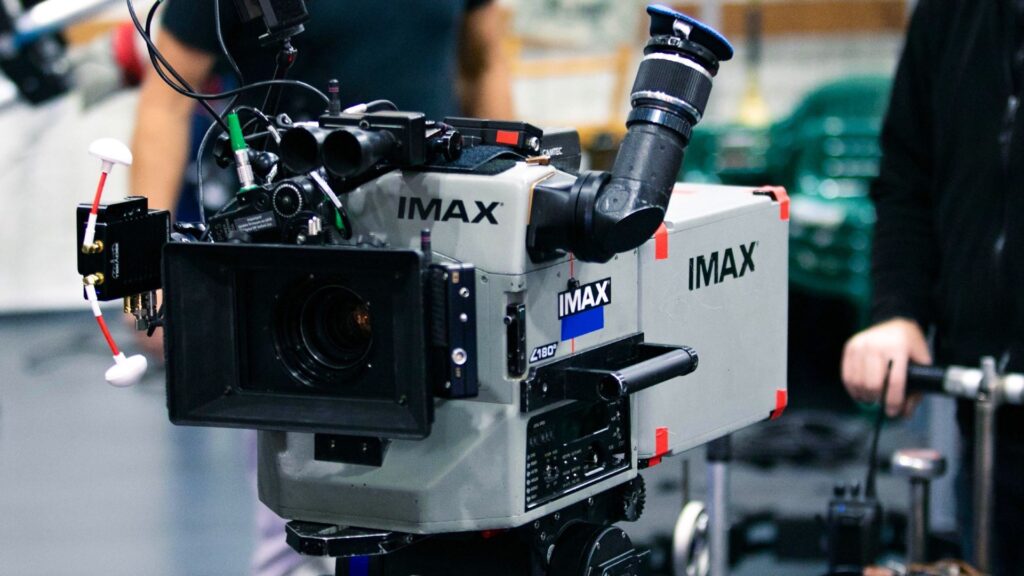
“IMAX Filmmaking: What is it like to Shoot on an IMAX Film Camera?” Y.M. Cinema Magazine. The Technology Behind Filmmaking, March 10, 2020. https://www.google.com/url?sa=i&url=https%3A%2F%2Fymcinema.com%2F2020%2F03%2F10%2Fimax-filmmaking-what-is-it-like-to-shoot-on-an-imax-film-camera%2F&psig=AOvVaw1sNuQz3Dk1QpezWEheeTPS&ust=1758293941009000&source=images&cd=vfe&opi=89978449&ved=0CBYQjRxqFwoTCOirosXJ4o8DFQAAAAAdAAAAABAV
Hello! This is my test blog post!
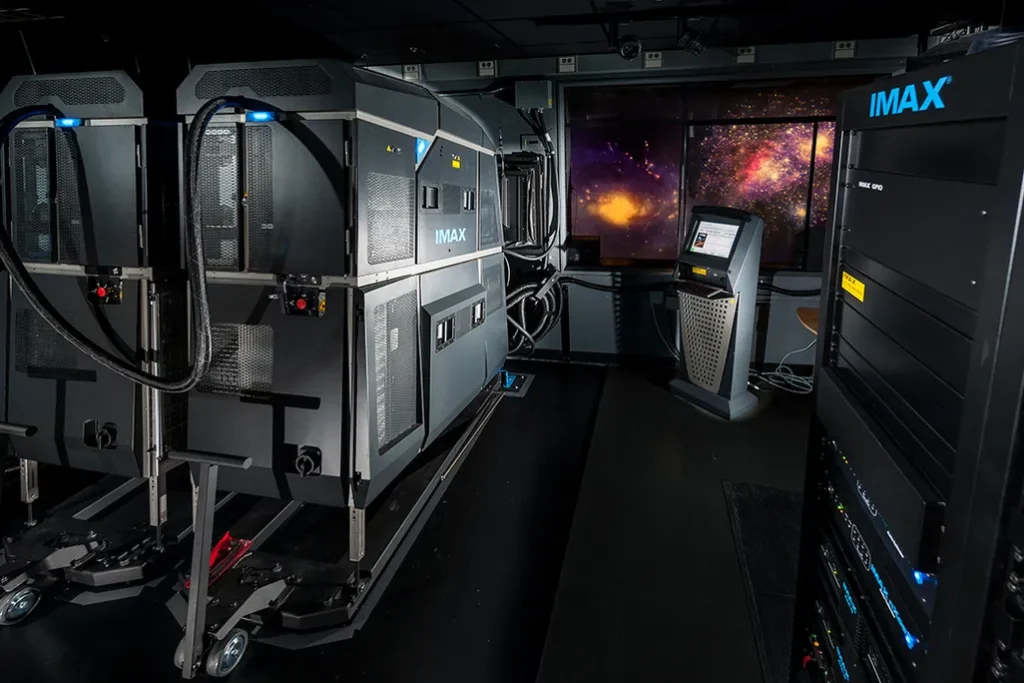
“How the Big Screen IMAX Experience Just Took a Quantum Leap Forward” May 13, 2015. Photograph. Smithsonian magazine. https://www.smithsonianmag.com/smithsonian-institution/imax-experience-udvar-hazy-center-took-quantum-leap-180955193/.
Hello, World! This is my test blog post. Peace out!
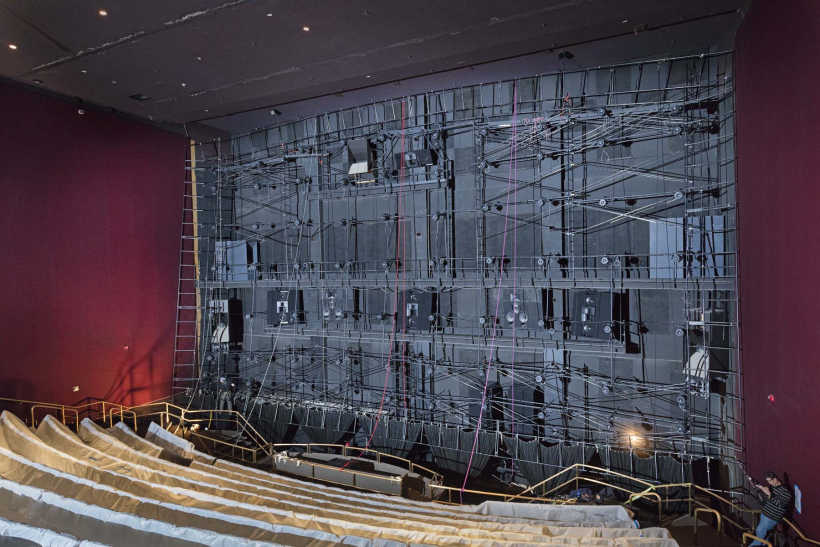
“Smithsonian Launches IMAX’s New Laser Technology at Lockheed Martin IMAX Theater.” Smithsonian. National Air and Space Museum, February 16, 2016. https://www.si.edu/newsdesk/releases/smithsonian-launches-imaxs-new-laser-technology-lockheed-martin-imax-theater.