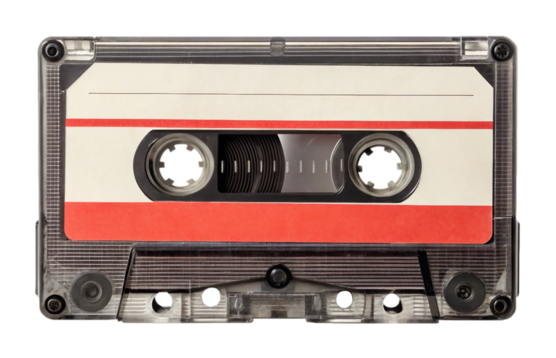
The primary inventor of the cassette tape was Lou Ottens, and he worked with a group of young inventors. He makes it known that he wasn’t the only one who made the cassette tape possible and acknowledges that it was a team project. 1 In 1952, Ottens joined Philips’ development division, and was soon picked to be in charge of the division in 1960. By 1961, the compact cassette was created by the development division team. The compact cassette was made to be portable and plastic-encased compared to the bulky, reel-to-reel recording systems of the time. As said in a 2013 interview between Lou Ottens and The Register, “The group of engineers mainly consisted of people with experience in the design or manufacture of record-playing and tape-recording equipment in Eindhoven-based groups.”2 These groups were based in Eindhoven which is a city in the Netherlands. This allowed him to have a group to work together on the project with, and provided a group of inventors to rely on from the laboratories and factories of the research centre in Eindhoven. However, before the group’s development of the cassette tape there was another project that influenced its development. Lou Ottens stated in a 2013 interview with The Register, “This invention was the first battery-driven reel-to-reel portable recorder, the EL 3585 came out in 1958, and became very successful.”3 This made the developers sure that the want for a pocket-sized, battery-powered version existed the market.
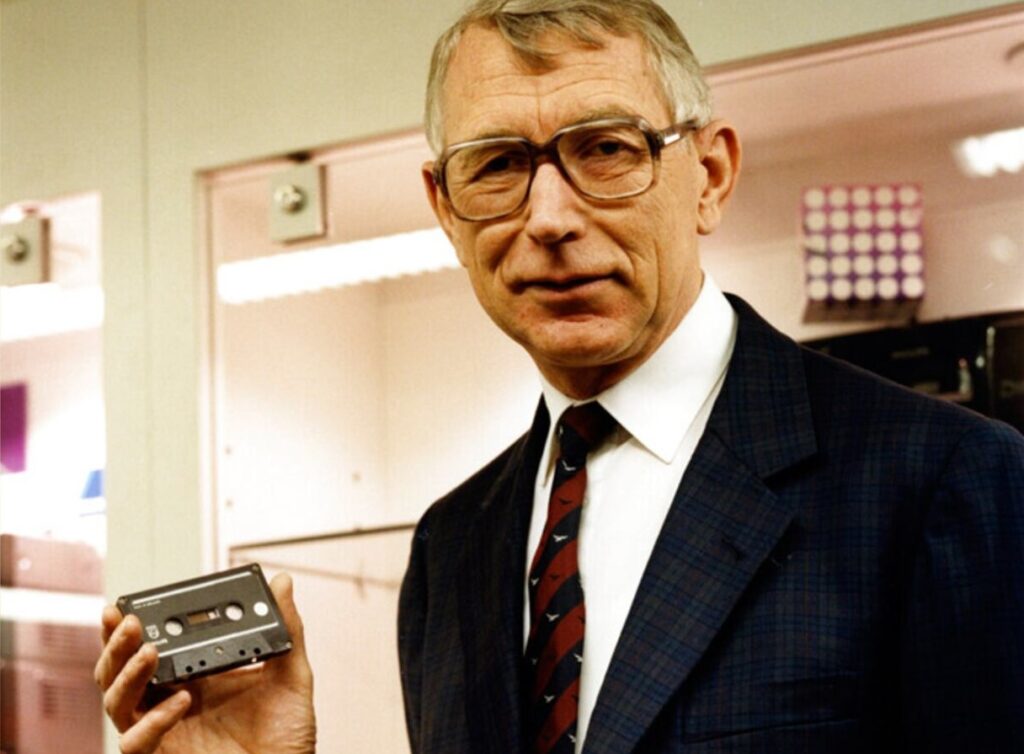
There are a large variety of major factors to get the product implemented by Philips. The development team, headed by Ottens, had a specific goal in mind, getting their product proposal accepted. According to Lou Ottens in a 2013 interview with The Register, “The product’s development group aimed to lower the price range of the gramophone and recording market.”4 With this new goal in mind, new proposals of the cassette sent to Philips began to present product outlines that were cheaper, smaller, battery conscious, and replicable. These factors influenced the innovation and development of the cassette tape moving in toward the size and design that would allow it to be as portable and cheap aiding its spread in popularity through the United States. As stated in Ottens’ obituary, “Ottens’ team wanted the final product to be small enough to fit in a pocket and easy enough to use on preexisting machines that the company already developed.”5 The group was also fueled by different models and developments of competing countries’ inventions. As said by Lou Ottens in a 2013 interview with The Register, “The Japanese competition on the market consisted of small, rim drive type reel-to-reel recorders of inferior reproduction quality and had a battery life of only a few hours.”6 Ottens’ group worked towards ideas for a new replacement of the EL 3585. This led to the group submitting different proposals for the cartridges, tape sizes, and tape speeds. Ottens and his team wanted a final product small enough to fit in a shirt pocket and easy to use on machines the company also developed.7
Philips had originally planned to work with RCA by using their RCA tape cartridge system cassette. In the end, Lou Ottens realized the dimensions and tape speed of the system made it incompatible with the product they wanted to create.
“The RCA cartridge had rather large recesses to accommodate room for the recording head and the erase head. That makes three holes where the tape is exposed when the cartridge is handled. We decided to minimize the tape exposure, so we didn’t want any big holes in the upper or lower surface of the cassette.”8
In the end, Philips, with the help of Ottens, chose to develop their own cassette, using RCA’s cassette system as a guide.9 The design of the first portable cassette recorder, the EL 3300, was started by Ottens cutting a block of wood to fit into his jacket pocket as it was meant to be portable.10 Philips introduced the cassette system at Internationale Funk Ausstellung Berlin, Berlin International Radio Exhibition, in 1963.11 The IFA is one of the oldest industrial fairs of consumer electronics and home appliances exhibitions. The cassette system’s introduction wasn’t popular upon its release and it didn’t provide much interest with groups in the world of audio.12 However, its design would be later used in the production of Japanese versions of Ottens’ system with their size being a notable difference to the original. 13 Philips’ spread of the Compact Cassette System was aided by the fact that they offered Ottens’ patent as well as invention for free to other manufacturers, like National and Sony.14 This allowed the compact cassette to become the standard throughout the world.
- Taylor, Zack and Seth Smoot. “Cassette: A Documentary Mixtape.” Gravitas Ventures, 2016. https://video.alexanderstreet.com/watch/cassette-a-documentary-mixtape. ↩︎
- Dormon, Bob. “Compact Cassette Supremo Lou Ottens Talks to El Reg.” The Register, November 2, 2013, https://www.theregister.com/2013/09/02/compact_cassette_supremo_lou_ottens_talks_to_el_reg/. ↩︎
- Ibid. ↩︎
- Ibid. ↩︎
- Miel, Rhoda. “Obituary: Compact Cassette Tape Inventor Lou Ottens.” Plastics News 32, no. 1 (March 15, 2021): 20. https://research.ebsco.com/linkprocessor/plink?id=be6f5566-fff9-3adf-a0ea-d767e794acc2. ↩︎
- Dormon, Bob. “Compact Cassette Supremo Lou Ottens Talks to El Reg.” The Register, November 2, 2013, https://www.theregister.com/2013/09/02/compact_cassette_supremo_lou_ottens_talks_to_el_reg/. ↩︎
- Ibid. ↩︎
- Ibid. ↩︎
- Masters, Marc. High Bias: The Distorted History of the Cassette Tape. Chapel Hill: The University of North Carolina Press, 2023. ↩︎
- Ibid. ↩︎
- Ibid. ↩︎
- Ibid. ↩︎
- Ibid. ↩︎
- Ibid. ↩︎
Leave a Reply